

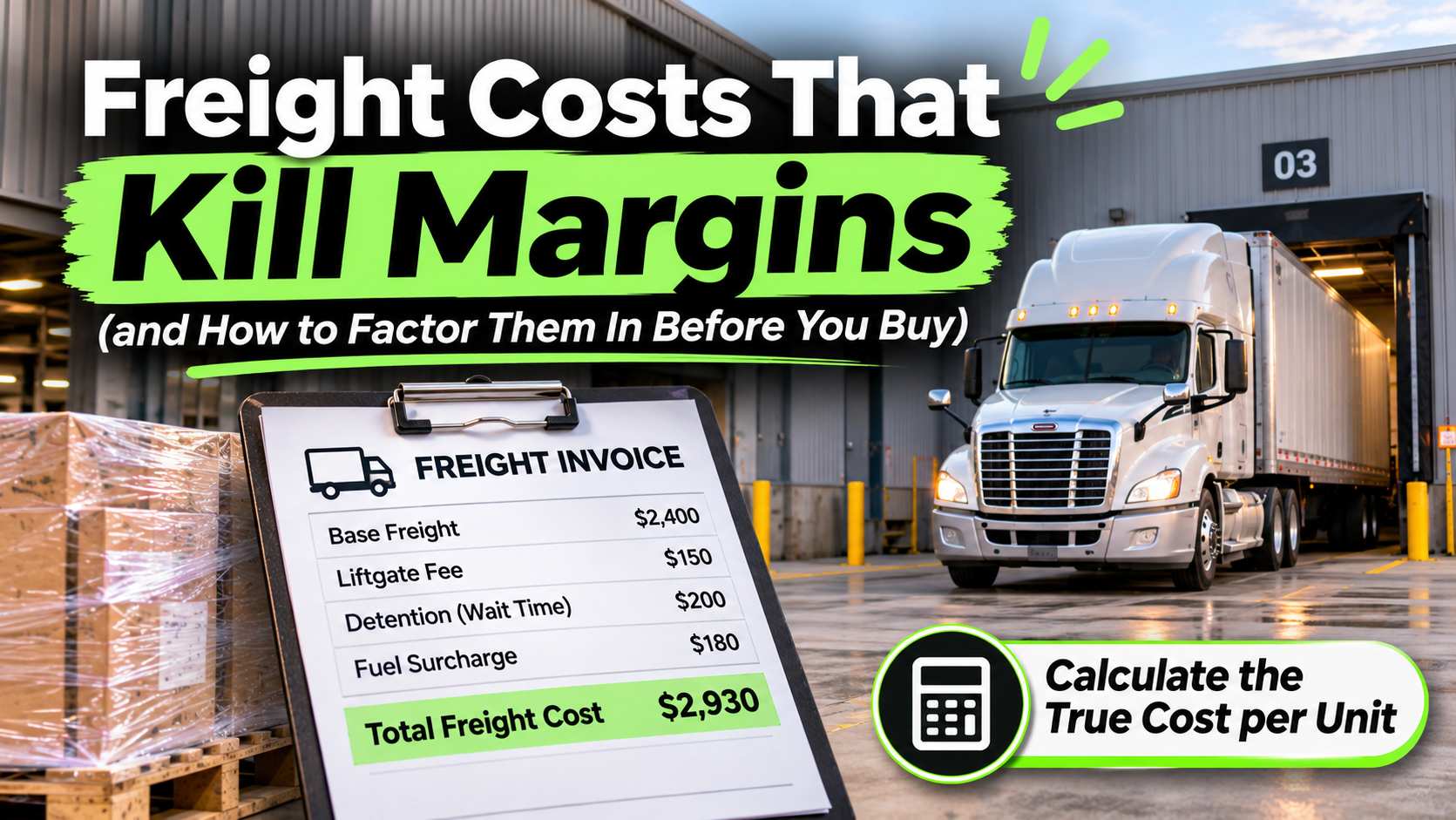
A great liquidation deal can still lose money once the freight bill arrives. Here’s how to work shipping into the math before you buy.
A liquidation deal can look great on the invoice and still lose money once the freight bill shows up. This is one of the most common ways new buyers get caught off guard, not because the purchase price was wrong, but because shipping was treated as an afterthought instead of a real line item in the math. Freight is not a rounding error. On a full truckload, it can be the difference between a genuinely profitable deal and one that barely breaks even.
THE OVERSIGHT
Why Freight Gets Ignored Until It's Too Late
Most buyers focus on the purchase price per unit because that's the number listed front and center on a deal. Freight quotes often arrive separately, sometimes after the purchase decision has already been made, which means the true cost of the load isn't fully known until it's too late to negotiate or walk away. This is especially common with buyers who are new to sourcing from farther distances, where the appeal of a lower per unit price on paper doesn't account for what it will cost to actually get that inventory to the warehouse.
THE DISTANCE FACTOR
Distance Changes the Math More Than People Expect
Freight cost scales with distance, and the impact is bigger than most new buyers assume. A load priced slightly higher from a supplier three hours away can end up cheaper overall than a load priced lower from a supplier ten hours away, once shipping is factored in. This is part of why experienced buyers tend to build relationships with sourcing partners closer to their own location over time. Keeping freight distance short protects margin in a way that's easy to underestimate until you've calculated it out on a few real deals.
THE HIDDEN COSTS
What Else Gets Bundled Into "Freight" That Buyers Miss
Freight isn't just the base shipping rate, and buyers who only account for that number are still missing pieces of the real cost.
Liftgate and delivery fees apply when a receiving location doesn't have a loading dock, which is common for smaller operations working out of a garage, storage unit, or standard commercial space rather than a full warehouse.
Detention or wait time charges can apply if a truck is held up longer than expected during loading or unloading, something that happens more often than buyers anticipate, especially with larger loads.
Storage fees at the origin can accumulate if a load isn't picked up promptly after purchase, which matters for buyers who move slower on scheduling pickup after the deal is finalized.
Fuel surcharges fluctuate and aren't always included in an initial freight quote, meaning the final invoice can come in higher than the number a buyer budgeted around at the time of purchase.
THE CALCULATION
How to Actually Factor Freight In Before You Buy
The fix here isn't complicated, it's just a step buyers need to build into their process instead of skipping. Before committing to any load, calculate the true cost per unit by adding the purchase price and the full freight quote together, then dividing by total unit count. That number, not the purchase price alone, is what should be compared against expected resale value when deciding whether a deal makes sense. Getting a firm freight quote before finalizing the purchase, rather than after, gives you the chance to renegotiate the purchase price or walk away entirely if the shipping cost changes the math more than expected.
THE TAKEAWAY
Treat Freight as Part of the Offer, Not an Afterthought
The buyers who consistently protect their margins are the ones who ask for a freight estimate before they ever agree to a price, not after. Building that habit into every deal, regardless of how good the purchase price looks on its own, is one of the simplest ways to avoid the kind of margin erosion that only becomes obvious once the invoice for shipping finally arrives.
