

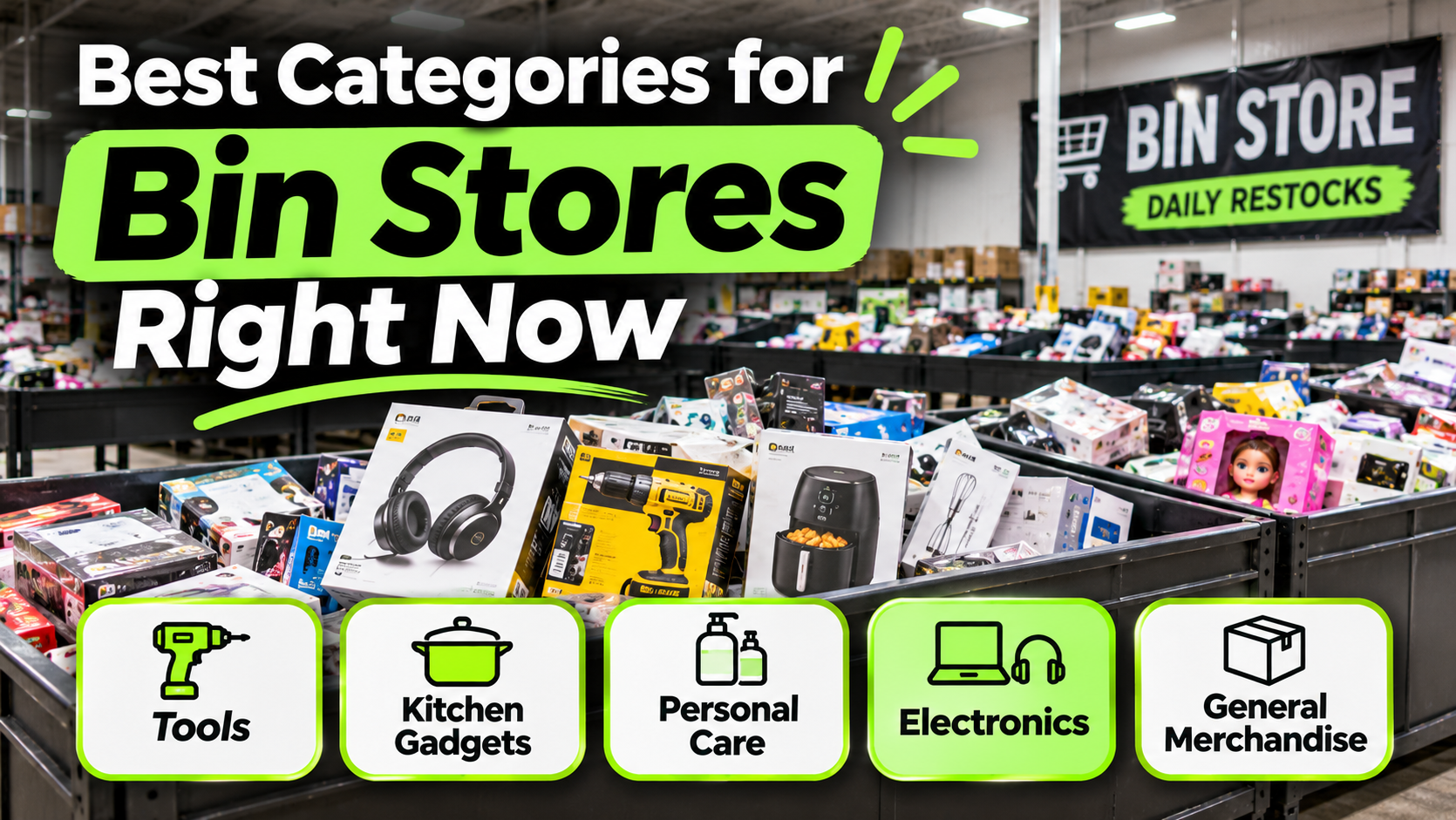
Which bin store categories are driving margin, which are driving foot traffic, and which need a closer look before you load up.
Bin stores have grown fast over the past couple of years, and that growth has changed what actually performs well on the floor. More operators chasing the same general merchandise pallets has pushed prices up in some categories while others have stayed relatively overlooked. If you're planning your buying mix right now, here's where the real margin and foot traffic currently sit.
THE STEADY PERFORMERS
Tools, Kitchen Gadgets, and Personal Care Are Quietly Outperforming
Operators tracking their numbers closely are seeing tools, kitchen gadgets, and personal care items consistently outperform clothing and consumables in margin. These categories tend to have a wider gap between what shoppers expect to pay retail and what they're willing to pay at bin store pricing, and they don't carry the sizing or seasonal risk that clothing does. A kitchen gadget or a set of hand tools sells just as well in March as it does in October, which makes these categories a reliable base to build a buying strategy around rather than a seasonal bet.
THE DRAW
Premium Electronics Still Pull the Crowds
Electronics remain the category that gets people through the door and generates the most social media buzz, and that hasn't changed. Game consoles, tablets, laptops, and name brand small electronics continue to headline the biggest restock and doorbuster events, precisely because they carry the highest perceived value gap between retail price and bin store price. The tradeoff is that electronics also attract the most competition at the sourcing level, since every operator wants them, which means margins on this category can run tighter than on less flashy inventory. A smart mix treats electronics as the traffic driver rather than the primary margin category.
THE UNDERRATED CATEGORY
General Merchandise Variety Still Wins for New Operators
For operators still building out their buying relationships, a broad general merchandise mix, electronics accessories, home goods, toys, and health and beauty items together, tends to work better than betting heavily on one narrow category early on. This variety keeps the bins interesting for repeat shoppers and reduces the risk of sitting on unsold inventory if one category underperforms in a given week. Specializing more heavily makes sense once an operator has enough sales history to know which categories their specific customer base responds to.
THE SEASONAL SHIFT
Watch the Return Cycle, Not the Calendar
Categories that spike hardest, like premium tech and toys around the holidays, follow the return cycle rather than the retail calendar. The heaviest supply of holiday electronics and toy returns actually shows up in January, once gift returns and post holiday clearance work their way through the supply chain, not in November. Operators who plan their categories around when returns actually surge, rather than when the original retail season happened, tend to catch better pricing and wider selection.
THE WARNING
Clothing and Consumables Need a Closer Look Right Now
Clothing and consumable categories have generally underperformed tools, kitchen goods, and personal care in current margin data, and it's worth understanding why before loading up on either. Clothing carries sizing risk that other categories don't, a pallet of the wrong size mix can sit unsold regardless of brand or condition. Consumables carry their own risk around expiration dates and shelf life. Neither category is a bad category outright, but both require tighter sourcing discipline than a straightforward tools or home goods pallet does right now.
THE TAKEAWAY
Build a Mix, Don't Chase One Category
The operators seeing the strongest results right now aren't the ones betting everything on a single hot category. They're building a mix, tools and personal care for steady margin, electronics for foot traffic, and general merchandise variety to keep the bins interesting week to week, then adjusting that mix as they learn what their specific customer base actually buys. Tracking sell through rate and return on investment by category, rather than going on instinct alone, is what separates operators who are scaling profitably from ones who are just staying busy.
