

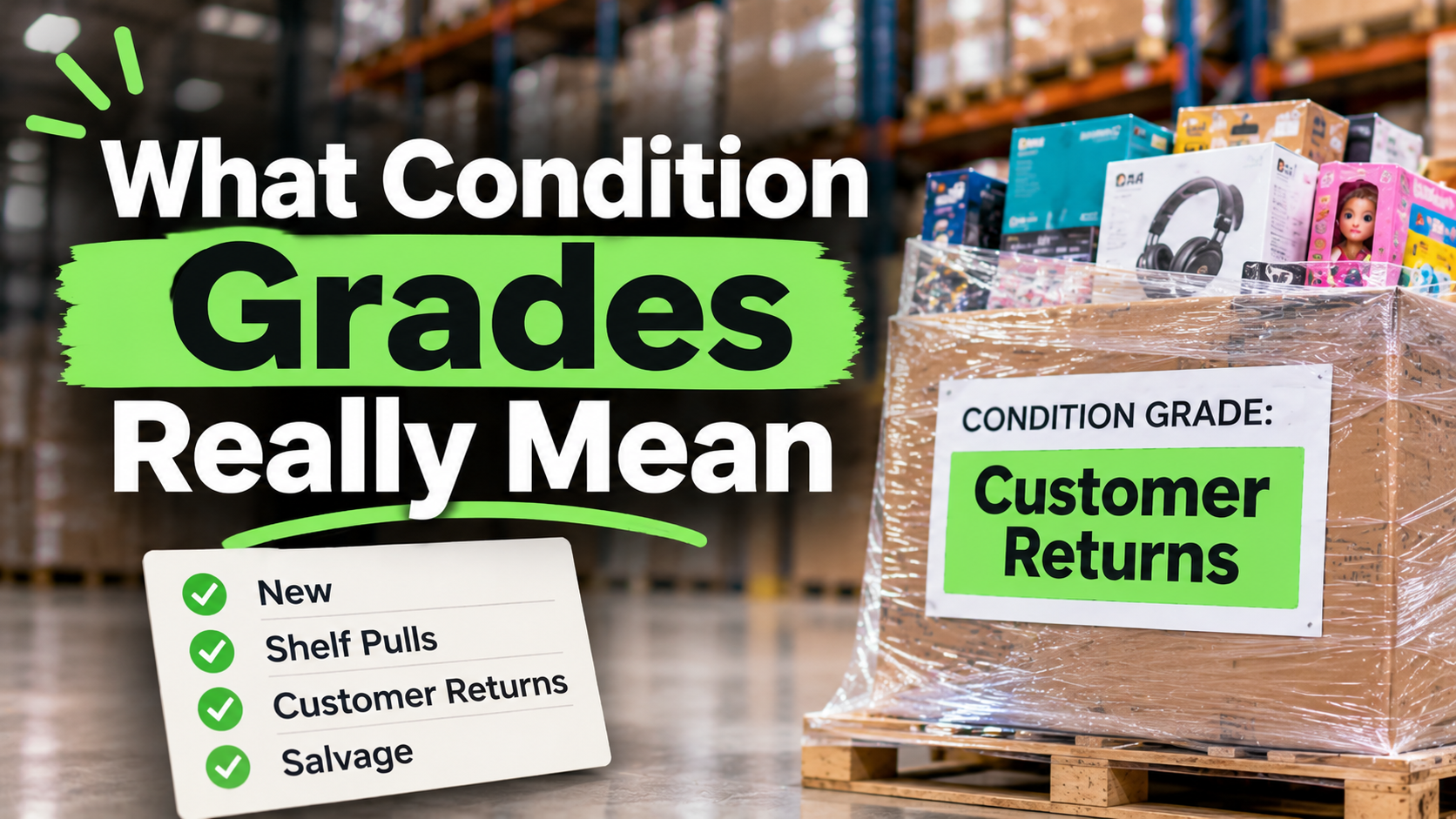
New, shelf pulls, customer returns, salvage: what each liquidation grade actually covers, and the questions to ask before trusting the label.
Condition grading is the single most important line on any liquidation listing, and it's also the one most buyers gloss over the fastest. A term like customer returns or shelf pulls sounds simple enough, but each one covers a much wider range of actual condition than the label suggests. Understanding what these grades really mean, and what they don't guarantee, is the difference between a load that performs the way you expected and one that leaves you sorting through more damaged product than you budgeted for.
THE GRADES
The Common Condition Grades, Explained Honestly
New or new in box means the item has never been opened or used, typically coming from overstock rather than returns. This is the most predictable grade, but it's also the most expensive, since there's little risk built into the price.
Shelf pulls are items that were on a retail shelf, possibly handled or displayed, but never sold or used by a customer. Packaging may show some wear, but the product itself is usually functional and in close to new condition. This grade tends to offer a strong balance between price and reliability.
Customer returns are items a customer purchased, used to some degree, and then sent back. This is where the range gets wide. A customer return might be genuinely like new, returned simply because someone changed their mind, or it might be missing parts, damaged, or non functional. The label alone does not tell you which one you're getting.
Salvage or damaged inventory is exactly what it sounds like, product with known functional or cosmetic issues. This grade is priced accordingly low, and buyers working in this category typically have repair skills or a resale channel built specifically for parts and fixer upper inventory.
THE GAP
What the Grade Doesn't Tell You
Here's the part that catches a lot of buyers off guard. A condition grade is a category, not a guarantee. Two pallets both labeled customer returns can perform completely differently depending on what actually got returned and why. A load of customer returns from a category with a low return rate, like small kitchen appliances, often skews toward items that were simply unwanted rather than defective. A load from a category with a high return rate, like clothing sized for fit, might include perfectly good product that just didn't fit the original buyer.
Suppliers rarely break this down further, and it's not always because they're hiding something. In many cases, the supplier genuinely doesn't have more granular data than the grade itself, especially on unmanifested loads where the seller is passing along whatever information they received further up the chain.
THE QUESTIONS
What to Ask Before You Trust a Condition Grade
A few direct questions can tell you more than the grade label alone ever will.
Ask what percentage of a similar past load was actually sellable versus damaged. A supplier who's worked with a category consistently should have a rough sense of this, even if it's not written on the manifest.
Ask whether the grading was done by the original retailer or estimated by the liquidator. Retailer applied grading tends to be more consistent, since it's based on an actual inspection process, while liquidator estimated grading can vary more depending on how the load was sorted upstream.
Ask if photos or a sample breakdown are available before you commit to a larger purchase. A supplier willing to show real examples of what's typically in a given grade is generally more trustworthy than one who can only point to the label.
THE TAKEAWAY
Treat the Grade as a Starting Point, Not the Full Picture
Condition grading exists to give buyers a rough sense of what they're getting, and it does that reasonably well as a starting point. The mistake is treating it as a precise guarantee rather than a category with real range inside it. Buyers who ask a few more questions before committing, and who build a relationship with suppliers who are upfront about what a grade actually tends to include, consistently end up with fewer surprises than buyers who purchase on the label alone.
