

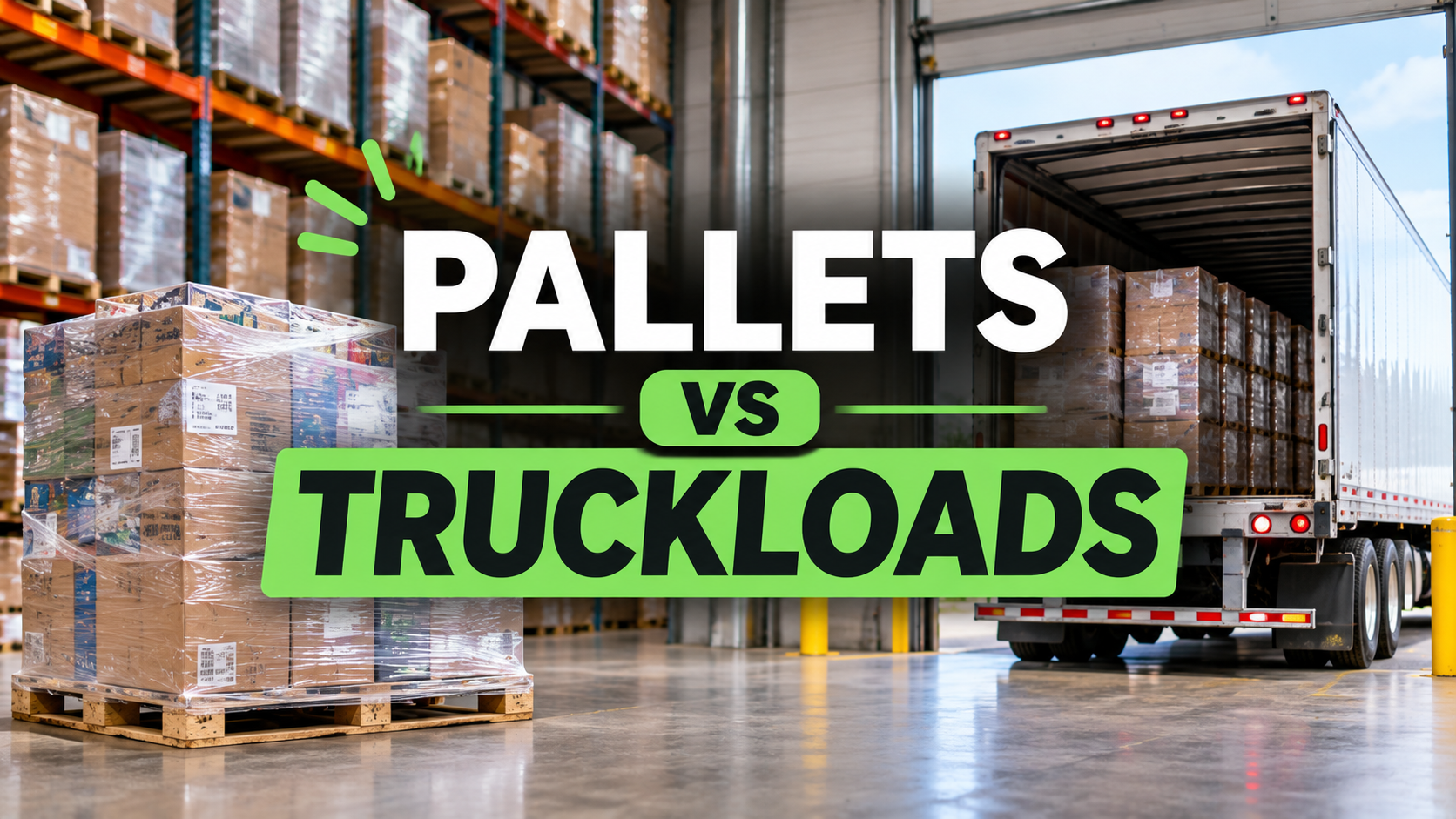
Pallets vs truckloads: here's how to know when your business is actually ready to scale up, and when sticking with pallets makes more sense.
At some point, almost every reseller who's been buying pallets for a while starts eyeing a truckload. The math looks appealing on paper, a lower cost per unit and a much bigger haul in one purchase. But scaling up from pallets to truckloads isn't really a pricing decision. It's an operational one, and jumping in before your business is actually ready for it is one of the more expensive mistakes a growing reseller can make. Here's how to know if the timing is right.
THE BASIC DIFFERENCE
What Actually Separates a Pallet From a Truckload
A pallet is a single unit of inventory, typically holding anywhere from a few hundred to a few thousand items depending on the category. A truckload is made up of many pallets, often 18 to 30 depending on the product type, shipped together in one load. Buying a truckload isn't just buying more of the same thing you'd get in a pallet. It's committing to receiving, storing, sorting, and moving all of that inventory at once, which changes almost every part of how your operation needs to run.
THE READINESS CHECK
Signs You're Actually Ready to Step Up
A few signals tend to show up together when a reseller is genuinely ready to move from pallets to truckloads, not just tempted by the per unit savings.
You've sold through pallets consistently without inventory piling up. If your current pallets are moving at a steady pace and you're not sitting on unsold stock from a month ago, that's a good sign your sales channels can actually absorb more volume.
You have the physical space to receive and store a full truckload. This sounds obvious, but it trips up more new buyers than almost anything else. A truckload needs a loading dock or the ability to receive freight, plus enough square footage to sort and stage everything without it becoming a bottleneck.
You understand your numbers well enough to know your real margin per unit. Buyers who've tracked their actual cost per unit, including freight, storage, and labor, across a decent number of pallets are in a much better position to know whether a truckload's lower per unit price genuinely pencils out for their business.
You have, or can quickly build, a multi channel sales strategy. Moving a full truckload through a single sales channel is slow. Buyers who've already diversified across a couple of outlets, whether that's a storefront, online marketplaces, or wholesale relationships with other resellers, are set up to move volume faster.
THE WARNING SIGNS
When Sticking With Pallets Makes More Sense
Just as important as knowing when to scale up is recognizing when it's premature.
Your cash flow is tight or unpredictable. Truckloads tie up a much larger amount of capital in inventory at once. If a slow month would put real pressure on the business, that's a sign your cash flow isn't ready to absorb the risk yet.
You haven't nailed down your category yet. Buyers who are still figuring out which product categories move well for them are usually better off testing that with smaller pallets before committing to a full truckload in one category.
You don't have reliable freight or receiving logistics sorted out. Underestimating shipping costs or receiving capabilities is one of the fastest ways to turn a good deal on paper into a loss once the truck actually shows up.
You're relying on a single sales channel. If most of your sales come from one marketplace or one storefront, a truckload's worth of inventory can overwhelm that channel and slow your sell through significantly, which eats into the savings that made the truckload attractive in the first place.
THE TAKEAWAY
Scale the Operation Before You Scale the Order
The lower per unit cost of a truckload is real, but it only pays off if the rest of the business can actually keep up with the volume. Most experienced buyers who've made the jump successfully didn't do it because the price looked good. They did it because their sales channels, storage, and cash flow were already built to handle it, and the truckload was simply the next logical step rather than a leap. If you're not sure your operation is there yet, there's nothing wrong with running a few more pallets first and using them to stress test your systems before committing to a bigger load.
